King A (gélose)/Pseudomonas P
• Identification de Pseudomonas aeruginosa
• Milieu favorisant la production de la pyocyanine
• Conditionnement : 500 g
------------------------------------------
Formulation :
Difco™ Pseudomonas Agar P
Approximate Formula* Per Liter
Pancreatic Digest of Gelatin : 20.0 g
Magnesium Chloride : 1.4 g
Potassium Sulfate : 10.0 g
Agar : 15.0 g
Dehydrated Appearance: Light beige, free-fl owing, homogeneous.
Solution: 4.64% solution, soluble in purifi ed water with 1% glycerol upon boiling. Solution is light amber, very slightly to slightly opalescent.
Prepared Appearance: Light to medium amber, slightly opalescent.
Reaction of 4.64% Solution with 1% glycerol at 25°C: pH 7.0 ± 0.2
***
Intended Use
Pseudomonas Agar P, also known as Tech Agar, is used for the enhancement of pyocyanin production by Pseudomonas.
Summary and Explanation
Pseudomonas aeruginosa is widely distributed in soil, water and foods. It is frequently isolated from infusion fluids, disinfectants and cosmetics. The organism causes disease in humans; e.g., ocular infections, burn wound infections and respiratory tract infections.(1)
Most strains of P. aeruginosa produce pyocyanin, a blue, water- and chloroform-soluble, nonfluorescent pigment that diffuses into the surrounding medium.(2) P. aeruginosa is the only Pseudomonas species known to produce this pigment. (However, certain strains are apyocyanogenic).
Some strains of P. aeruginosa produce other pigments, such as the brown-black pyomelanin, the red pyorubin or the yellow pyoverdin. Pyoverdin is a water soluble fluorescent pigment often produced by P. aeruginosa and other pseudomonads isolated from humans.(2) The presence of these pigments can, however, mask the production of pyocyanin.(2) Pseudomonas Agar P (Tech Agar) are modifications of two media (Medium A and Medium B) that King et al. developed to enhance pigment production for improved differentiation of pseudomonads.(3)
Principles of the Procedure
Pseudomonas Agar P (Tech Agar) contains enzymatic digest of gelatin to provide amino acids and other essential nitrogenous substances. The gelatin peptone is low in phosphorous to minimize the inhibitory action on pyocyanin production.(4) Magnesium, potassium and sulfate ions promote pyocyanin production.(4)
Both media contain glycerol, which acts as a source of Energy and enhances pigment production.
Directions for Preparation from Dehydrated Product
1. Suspend the powder in 1 L of purified water containing 10 g of glycerol: Difco™ Pseudomonas Agar P – 46.4 g.
2. Heat with frequent agitation and boil for 1 minute to completely dissolve the powder.
3. Autoclave at 121°C for 15 minutes.
4. Test samples of the finished product for performance using stable, typical control cultures.

 Retour aux résultats de la recherche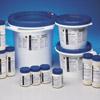
 Ajouter au panier